
2-minute read · the quiet coffee switch
Why Are So Many Coffee Drinkers Quietly Switching to Matcha This Year? And Almost All of Them Say the Same Thing: “Why Did No One Tell Me Sooner?”
Same caffeine kick, none of the jitters, the afternoon crash, or the stained teeth. The people who made the change describe it less like a new drink and more like a mistake they finally stopped making.

Sound familiar?
The loop nobody signed up for.
It's not the coffee itself — it's the shape of it. Caffeine on its own hits fast and leaves fast, and the day ends up looking like this:
07:30
Cup one
Glorious. Genuinely. No notes.
09:00
The peak
Inbox zero energy. You could run a small country.
14:30
The cliff
Eyelids negotiating. Focus somewhere else entirely.
15:00
"Just one more"
Cup three. Tonight's sleep sends its regards.
↻ repeat tomorrow
The difference
Same caffeine. Different delivery.
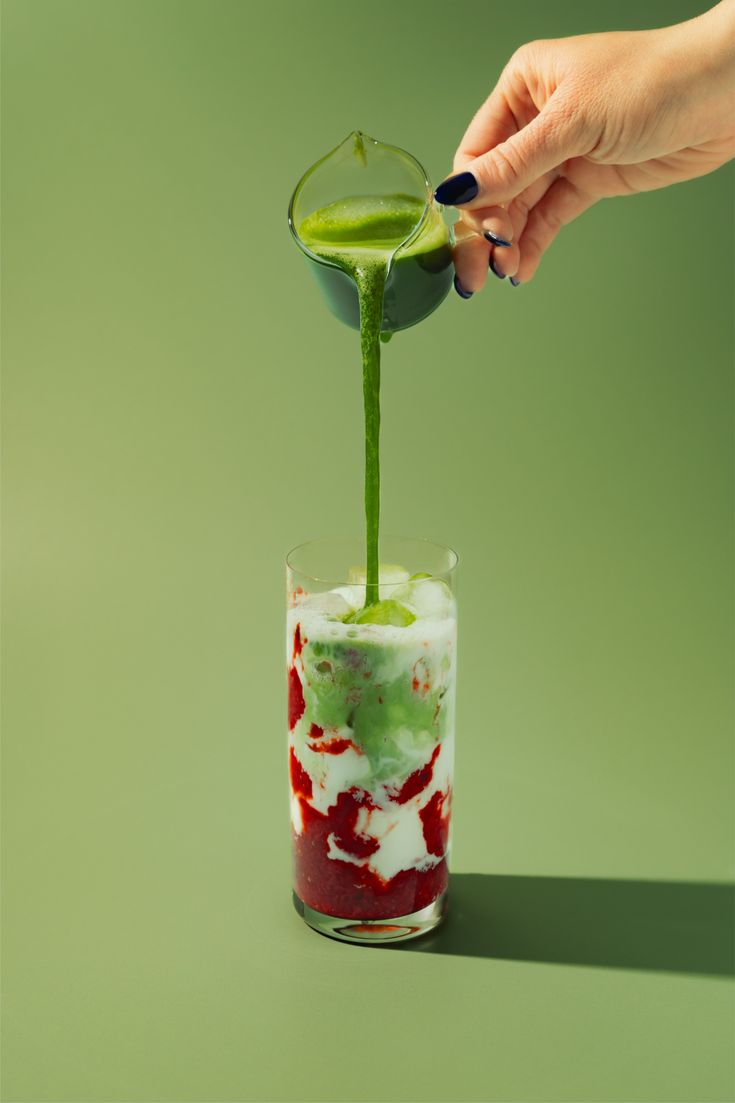
Matcha — whole green tea leaves, stone-ground into powder — carries about two-thirds the caffeine of a coffee. But it comes naturally bundled with L-theanine, and that pairing changes the shape of the lift: it arrives over the course of an hour instead of twenty minutes, and eases off instead of dropping you.
Think drip-feed, not firehose. The curve looks like this:
A brighter side effect
Coffee stains your teeth. Matcha doesn't.
You'd think a bright-green drink would be the enemy of a white smile. It's the opposite. Coffee and black tea are loaded with dark tannins that cling to enamel and yellow it over time. Matcha has almost none — so it rinses clean instead of staining.

Not a whitening treatment — just a drink that doesn't work against your smile the way coffee quietly does.
First sips
What our customers say.
I’ve been drinking matcha for the last 12 months now, slowly swoping out my 3 morning coffees for matcha instead and this is by far the nicest and most mellow matcha I have come across so far. When made correctly it is a smooth mild drink and well worth the little effort!
Natalie Dawsonthis powder is perfect. great product for it’s cost, as you get quite alot of powder enough for it dissolves perfectly, for a great texture and taste. it creates a nice perfect colour definitely recommend for beginners into making their own, as this was a gift and it has been so easy for them to use
Brody KentI buy this matcha every month its very good quality powder and makes for a pleasant drink, matcha is best drunk at a low heart to capture the flavour and get all the health benefits of green tea. If your used to drinking hot tea, it did take some adjustment to drinking a warm tea. The alternative is to have a cold latte matcha with Oat or nut milk.
— M. ClarkThe tin the whole article was about
Meet matchacha up close.
Loved by thousands who ditched the afternoon coffee
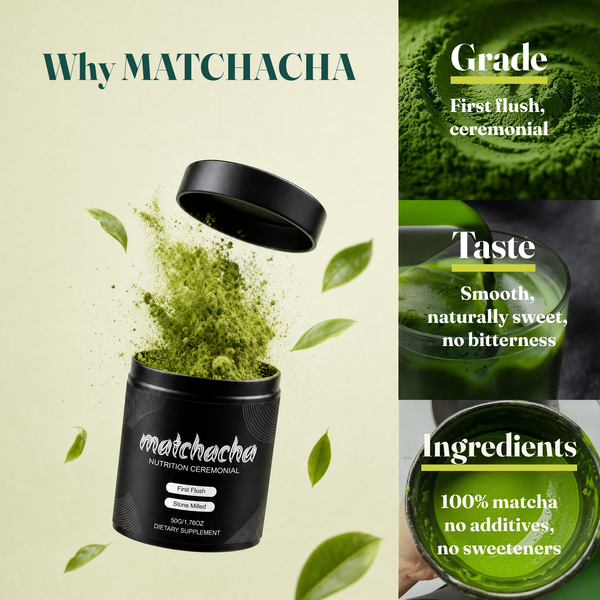
- First-flush ceremonial Uji matcha — the real grade, not supermarket green
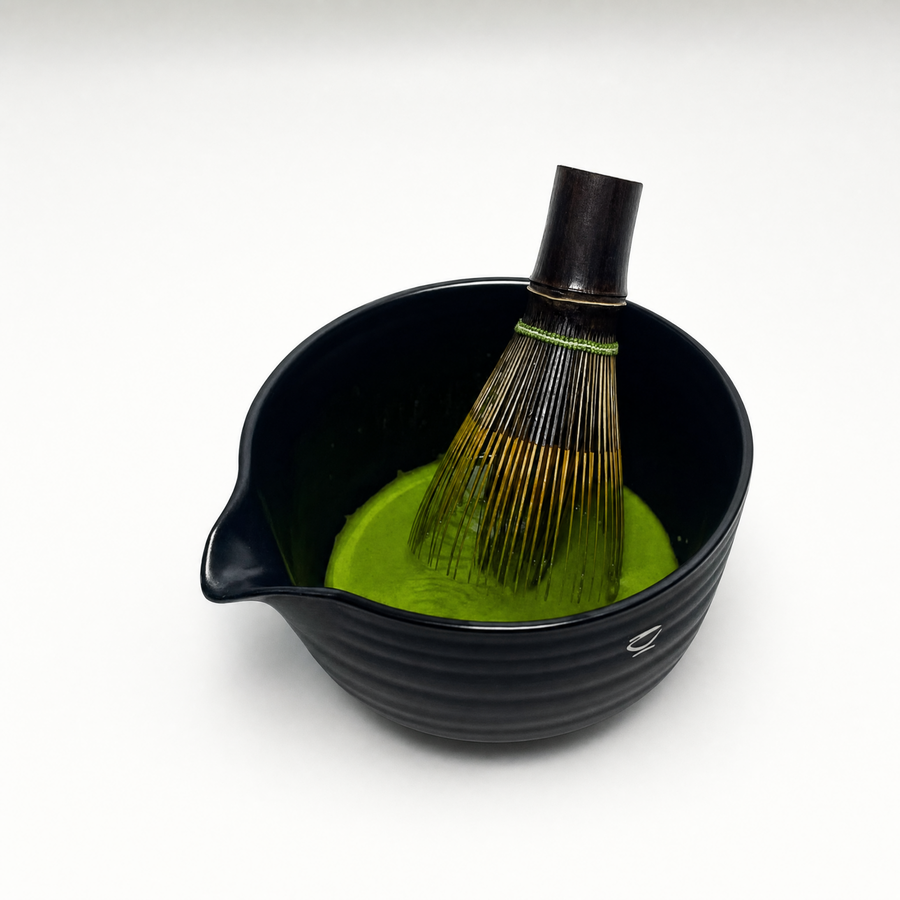
- Whisks into a smooth, naturally sweet cup in 60 seconds
- Free worldwide delivery, dispatched in 24h
- 30-day love-it guarantee — taste it, or your money back
More than a drink
The 60 seconds you keep for yourself.
The people who switch aren't quitting coffee out of guilt. They're the ones who read labels, who'd rather own one great thing than five average ones — who treat what they drink every single day as something worth choosing well.
For them the whisking isn't a chore. It's the one minute of the morning that belongs to nobody else.
The catch
Tried matcha and hated it? You met the wrong grade.
Here's what nobody tells you: most matcha served in the US is culinary grade — a dull, bitter powder made for baking, not drinking. It's cheaper by a mile, so it's what most cafés whisk into your $6 latte. One swampy sip and people write off matcha forever.
Ceremonial grade is a different plant experience: first-pick leaves from Uji, Japan — shaded for weeks so they turn sweet, then stone-milled so slowly the powder never heats up. It tastes creamy, fresh and gently grassy. No sugar needed. That's the only grade matchacha sells.